8 screen-free learning games every South African child should know
From morabaraba and diketo to kgati and bottle-top maths, these traditional and everyday South African games teach counting, strategy, language and teamwork.
 By the Asifunde Nathi team · 6 min read
Long before tablets and TV, South African children learned through play: in the yard, on the street and around the fire. Many of those games are still brilliant learning tools today. They teach counting, strategy, coordination, patience and language, and they cost almost nothing.
Here are eight screen-free games to share with your children, from the ancient strategy game morabaraba to simple games you can play while waiting for supper.
In this article
- 1. Morabaraba: the great African strategy game
- 2. Diketo: the stone-catching game
- 3. Kgati: skipping rope with songs
- 4. Bottle-top maths
- 5. Clapping and singing games
- 6. "I spy" in your home language
- 7. Kitchen spaza shop
- 8. Story stones
- Why screen-free play matters
- Screen time that respects tradition
- Questions parents ask
1. Morabaraba: the great African strategy game
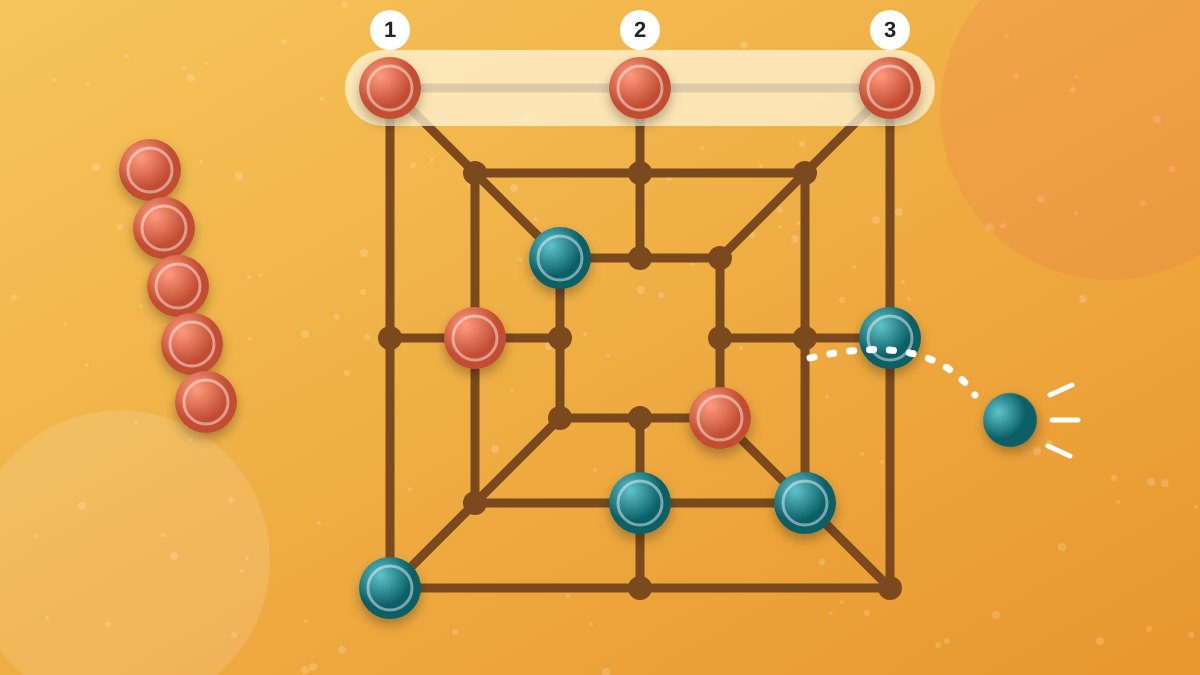
Morabaraba is a traditional two-player strategy game played across Southern Africa. In isiZulu and isiXhosa it is known as umlabalaba. It was recognised as a traditional sport in South Africa in 1996, and today players can even earn provincial and national colours through Mind Sports South Africa.
What you need
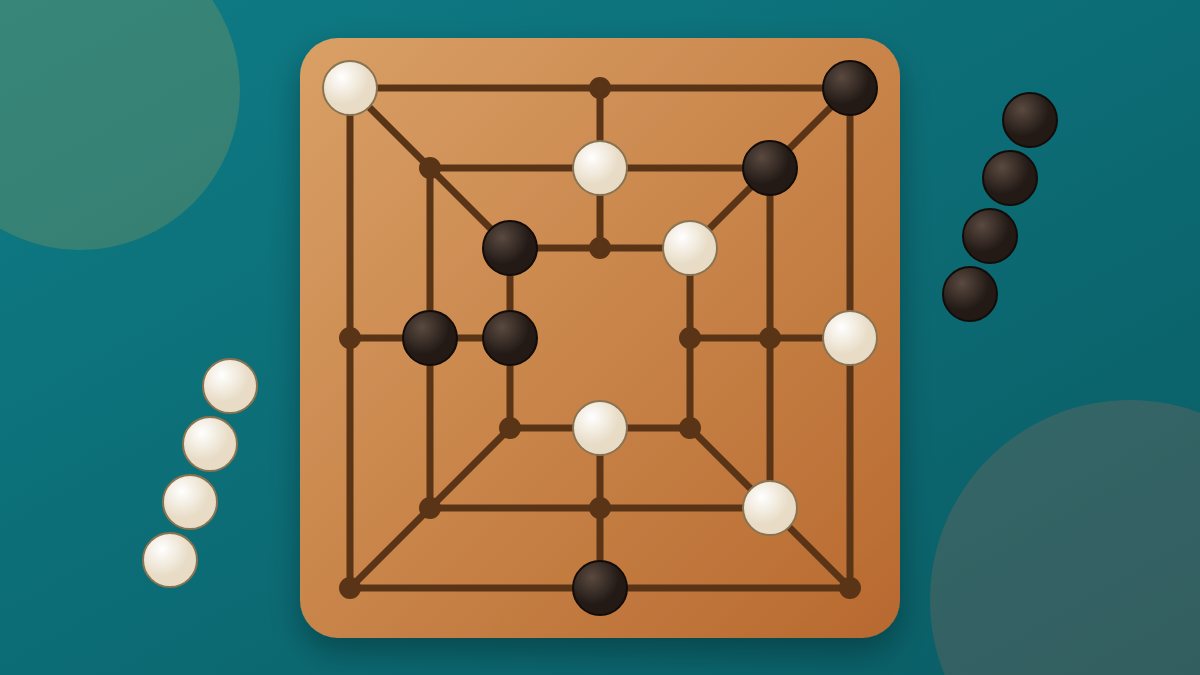
A board of three squares, one inside the other, with lines joining their corners and the middle of their sides, giving 24 points where pieces can stand. Each player has 12 pieces, traditionally called cows. You can scratch the board into the sand, draw it on paper, or use bottle tops in two colours as cows.
How to play (a common version)
- Placing: Players take turns placing one cow at a time on any empty point.
- Make a "mill": If you get three of your cows in a straight line along a line on the board, you have made a mill and may "shoot" (remove) one of your opponent's cows. In most versions, cows that are already part of a mill are safe unless all of that player's cows are in mills.
- Moving: Once all cows are placed, players take turns moving one cow along a line to an empty neighbouring point, still trying to make mills.
- Flying: In many versions, when a player has only three cows left, those cows may "fly" to any empty point.
- Winning: You win when your opponent has only two cows left, or cannot make a move.
Rules vary between families and regions, so agree on yours before you start.
What children learn
Planning ahead, thinking about the opponent's next move, counting, patience and good sportsmanship. Morabaraba is also a great way to talk about the importance of cattle in many Southern African cultures.
Want the full rules, a printable way to draw the board and tips for teaching it by age? Read our step-by-step guide: Morabaraba rules for kids.
2. Diketo: the stone-catching game
Diketo is a traditional game played with small stones, similar to jacks.
How to play
Dig a small hole or draw a circle and put about ten small stones in it. Throw one larger stone (the "gho") into the air, quickly move stones out of the circle with the same hand, and catch the gho before it lands. Then do it in reverse, moving the stones back in one at a time.
What children learn
Hand-eye coordination, concentration, counting and quick thinking.
3. Kgati: skipping rope with songs
Kgati is a skipping game with a long rope. Two children turn the rope while others jump in, often singing songs or chanting rhymes in their home language.
What children learn
Fitness, rhythm, teamwork, counting jumps, and the home-language songs and rhymes that go with the game.
4. Bottle-top maths
Collect bottle tops in different colours. They are free, washable and endlessly useful.
- Count and sort by colour.
- Make patterns: red, blue, red, blue... what comes next?
- Add and subtract: "You have five tops, I take two. How many are left?"
- Count in your home language as well as English.
5. Clapping and singing games
Hand-clapping games with rhymes are popular in playgrounds all over South Africa. Teach your children the clapping songs you grew up with in your home language, or ask a grandparent to share theirs.
What children learn
Rhythm, memory, coordination and lots of home-language vocabulary.
6. "I spy" in your home language
The classic game, with a twist. Play in isiZulu ("Ngibona..."), Sesotho ("Ke bona...") or your home language. Instead of letters, younger children can use colours: "I spy something red."
What children learn
Vocabulary, colours, observation and listening.
7. Kitchen spaza shop
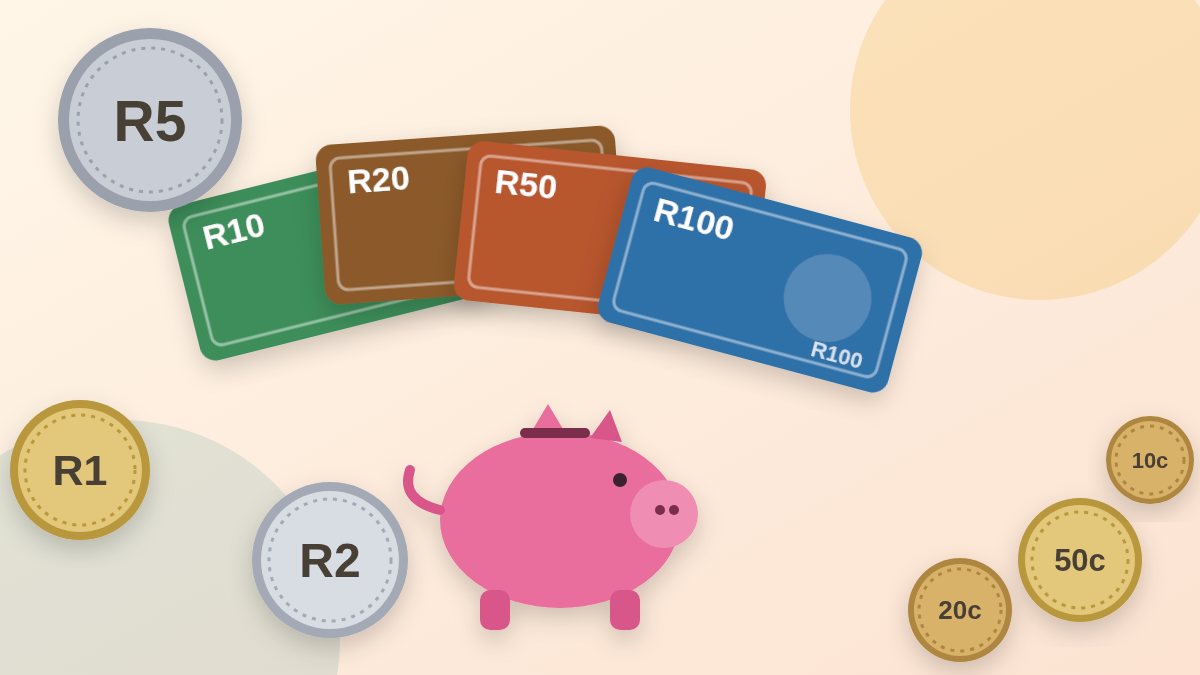
Set up a pretend shop with tins, fruit and boxes from the kitchen. Add price tags and use real or play coins.
What children learn
Recognising coins, adding, giving change and conversation skills. See our full guide to teaching children about money with rands and cents.
8. Story stones
Paint or draw simple pictures on flat stones: a sun, a cow, a house, a child, a river. Put them in a bag. Take turns pulling out a stone and adding to a story that includes the picture.
What children learn
Imagination, storytelling, sequencing and language. Tell the story in your home language to make it even more powerful.
Why screen-free play matters
The World Health Organization recommends that young children spend plenty of time being physically active and limit sedentary screen time to no more than one hour a day for 2- to 4-year-olds. Active, social play builds strength, coordination, language and relationships in ways screens cannot. For more on balancing screens, read our screen time guide by age.
Screen time that respects tradition
When your child does use a screen, make it count. Asifunde Nathi includes a digital version of Morabaraba, along with counting games, the Spaza Shop money game and Stick Puzzles for logic, all in nine South African languages for children aged 2 to 10, in short sessions of 5 to 10 minutes. Try it free for 7 days.
Learning that speaks their language
Games, stories and a weekly plan in nine South African languages, for ages 2 to 10. Free for 7 days.
Questions parents ask
What age can children learn morabaraba?
Many children can learn simple placing-and-mill rules from about age 6 or 7. Younger children can play a simplified version with fewer cows, or simply practise making lines of three.
Is morabaraba the same as nine men's morris?
They are related games. Morabaraba uses a board with diagonal lines and 12 pieces per player, while nine men's morris, known in Europe, has no diagonals and uses nine pieces each.
What if I don't know the traditional rules of these games?
Ask grandparents, aunts and uncles. Many adults remember these games from childhood and love teaching them. Rules often differ between families, which is part of the fun.
How much time should my child spend on active play?
The WHO recommends that children aged 3 to 4 spend at least 180 minutes a day in a variety of physical activities. For older children, aim for plenty of active play every day, with screen time kept in balance.